
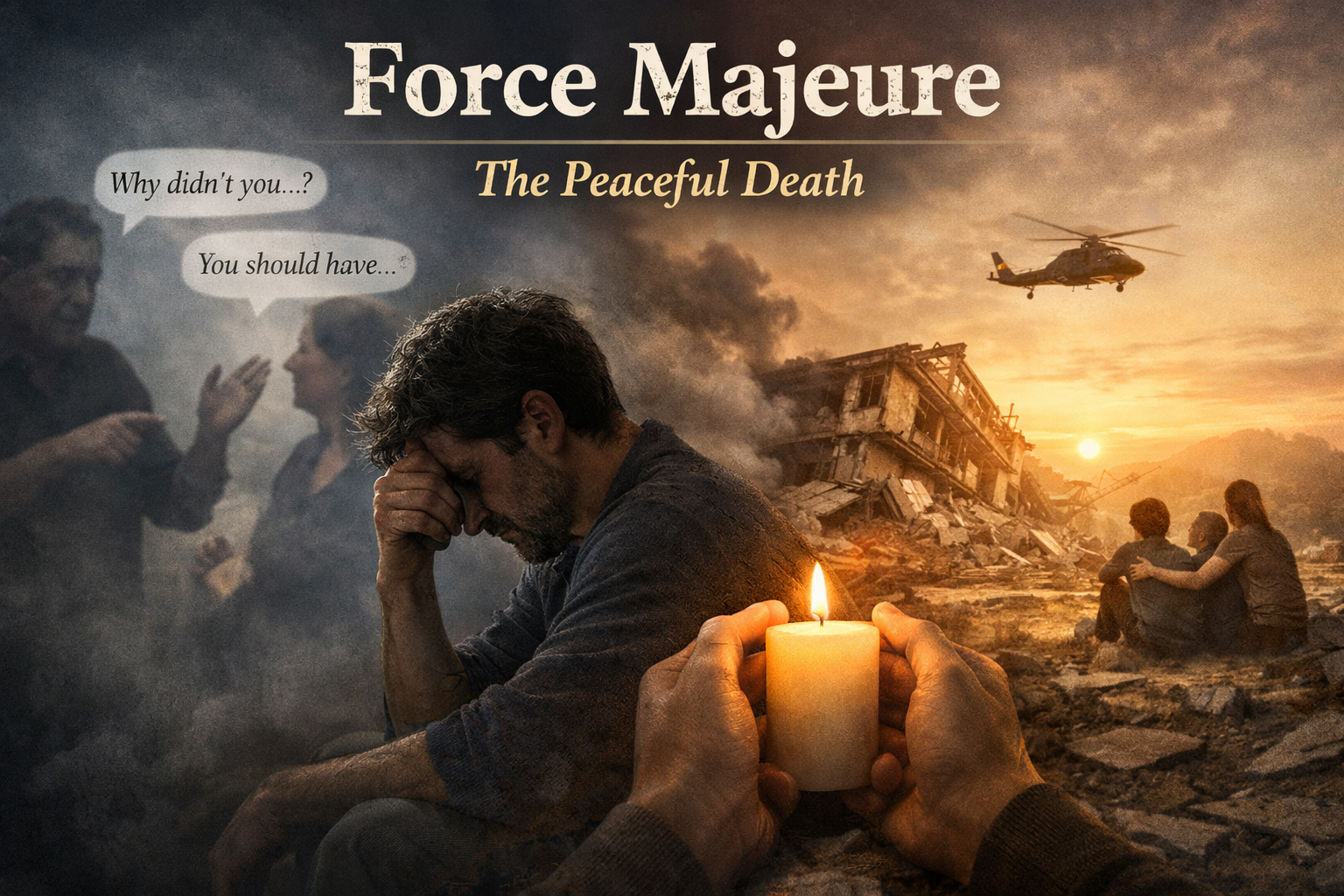
Yes, you heard it right. Everyone hopes for a peaceful death. But what does that have to do with a force majeure clause?
First, let’s understand what force majeure means.
You might have seen this term in agreements or insurance policies. In simple words, force majeure refers to unexpected events beyond human control, like natural disasters, war, or other unavoidable situations, that prevent people from fulfilling their obligations.
If you have watched the Bollywood movie Oh My God!, you may understand this better. In the movie, Mr. Kanji’s shop is destroyed by an earthquake. Since he has insurance, he approaches the company for a claim. But the company refuses, saying the damage was caused by an “Act of God,” which is not covered.
Angry and frustrated, he takes the matter to court. The insurance company argues that if God caused the damage, then God is responsible, not them. So, Kanji sends legal notices to temples, churches, and mosques. In the end, the court gives a verdict in his favor.
But in real life, things are not so simple.
In business agreements, a force majeure clause protects both parties. If something unavoidable happens, either party can inform the other and avoid penalties. These clauses are usually discussed and agreed upon by both sides before signing the contract.
However, insurance policies are different. Most of the terms are fixed and usually favor the insurance company. It is often a “take it or leave it” situation. If you want the policy, you must accept the terms as they are.
So now the question is, what does all this have to do with a “peaceful death”?
This is my personal viewpoint.
I don’t know about the rest of the world, but in India, when someone dies, people often start acting like investigators and judges, without any facts. They don’t need a courtroom; their tongue becomes the weapon, and their assumptions become the judgment.
- If someone dies at home, people say: “You should have taken them to the hospital. They might have survived.”
- If someone dies in a hospital: “You should have gone to a better hospital.”
- If someone dies in an accident: they blame the road, the driver, or anything else.
In the “court of public opinion,” everyone becomes guilty, except the people who are judging.
But what happens when someone dies due to war or natural disasters? When a missile strikes or an earthquake hits?
In such cases, No one dares to blame God. Instead, they say His plans are better than ours. They call it an “Act of God” or unavoidable tragedy. There are no accusations, no questioning, no judgment on family.
At least in those situations, the family is left in peace, without the burden of others’ opinions.
So, in a way, a death caused by a “force majeure” event can be called a peaceful death, not because the event itself is peaceful, but because it frees the family from blame and judgment.